API Expands Its Scholarship Program in Support of Medical Laboratory Science and Names 2026 Scholarship Awardees
June 24, 2026
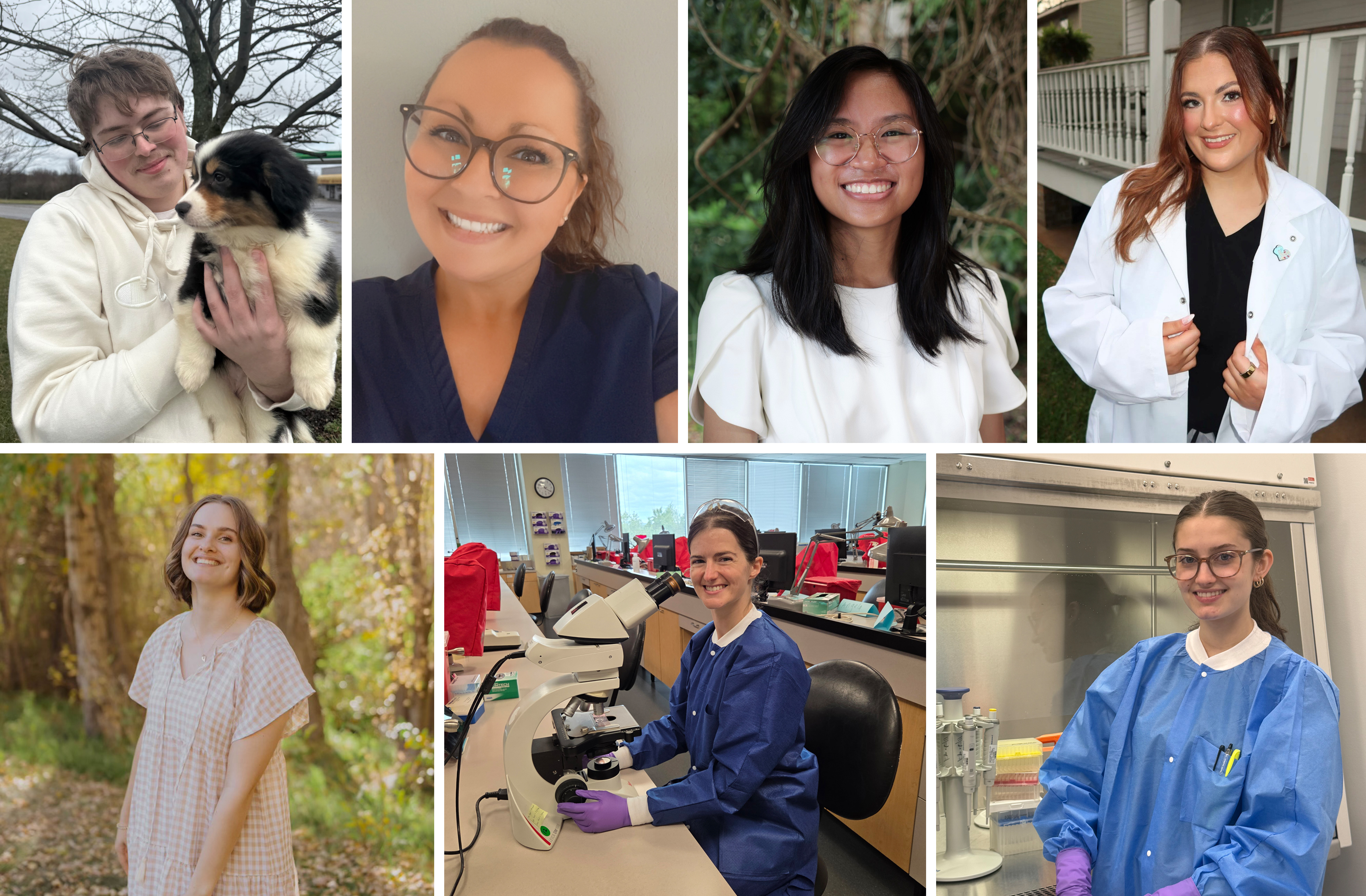
Top row, left to right: Brytan Pendergrass, Ashley Cupp, Cerissa Salameda, and Julie Hymel. Bottom row: Morgan Carn, Kristin Wirtz, and Josie Cochran—recipients of API’s 2026 Scholarships.
For 2026, the American Proficiency Institute (API) awarded scholarships to eight students in the medical laboratory sciences as part of its nationwide program. “The caliber of students entering the medical laboratory profession is impressive,” said Sue Harmer, API President. “API is pleased to help strengthen the laboratory workforce pipeline through these awards.”
API awarded $5,000 scholarships to medical laboratory science students: Morgan Carn, Brigham Young University in Provo, Utah; Josie Cochran, Wichita State University in Wichita, Kansas; Genesis Romero, University of Texas at El Paso; and Kristin Wirtz, Oregon Institute of Technology in Wilsonville, Oregon.
API awarded $2,500 scholarships to medical laboratory technician students: Ashley Cupp, Ivy Tech Community College in Sellersburg, Indiana; Julie Hymel, Fletcher Technical Community College in Schriever, Louisiana; Brytan Pendergrass, Volunteer State Community College in Gallatin, Tennessee; and Cerissa Salameda, Florida State College at Jacksonville, Florida.
API has awarded scores of scholarships to medical laboratory students over the past 18 years. “API is proud to support the next generation of clinical laboratorians through these awards,” said Harmer.
Scholarship winners describe their experiences, motivations, and future aspirations:
Carn has an eye for improving processes in the laboratory. Noticing there were no reference guidelines for receiving emergency blood, Carn said she “took it upon myself to coordinate with the lab and my unit manager to make official emergency transfusion guidelines, leading to a significant decrease in the time to transfusion. I volunteered my time to collect our unit’s provided references for gold standard tests, suggested lab tubes for each test, and what volume of blood is required for each test. Using this information, I was able to update draw lists and requirements, resulting in a decrease in required redraws for patients.”
Cochran competed in the National Cell Bowl with her team, placing first by identifying 30 blood cells in 28 seconds. Despite this success, “so many students across campus do not know what medical laboratory science is,” Cochran observed. “How many are missing out on a career that might be perfect for them because of the field’s lack of public presence? I began advocating for the profession with students in my undergraduate courses, and a few are now my peers in the MLS program.”
“I carry with me the discipline to endure, the perspective to value opportunity, and the determination to succeed – not only for myself, but for those who taught me how to keep going when everything felt uncertain,” said Romero. “I see myself using the laboratory as a tool to help patients better face whatever life brings to them.”
A former elementary science teacher, Wirtz said she “learned how to break down complex ideas into clear, understandable steps, recognize when someone is struggling, and adjust my approach in real time. By combining my scientific training with my experience in education, I offer a unique blend of technical and interpersonal skills to the medical laboratory profession.”
Cupp, who has a background in emergency medicine and pharmacy, revealed, “I responded to an emergency call involving a patient experiencing severe shortness of breath and confusion; despite our rapid response and supportive care, it was clear that we were only addressing the immediate symptoms. This realization shifted my perspective, and I began to see medical laboratory science as an essential extension of emergency medicine. Medical laboratory professionals uncover the “why” behind a patient’s condition.”
“Choosing to pursue medical laboratory science is my way of giving back to the system that helped save me,” explained Hymel. “Having been a patient whose life depended on accurate diagnostics, I am motivated to uphold the highest standards of precision, ethics, and compassion in the laboratory.”
“To gain direct exposure to the fast-paced laboratory environment and develop a deeper understanding of the role laboratory professionals play in patient care, I began work as a specimen processor,” said Pendergrass. “I have already immersed myself in the field and confirmed my passion for medical laboratory science.”
“I aim to advocate for greater awareness of the role laboratory testing plays in prevention, diagnosis, and treatment, particularly in communities that may face barriers to healthcare access,“ said Salameda. “By combining my clinical expertise with my passion for community engagement, I aspire to ensure patients receive the high-quality services they need.”
The American Proficiency Institute is one of the largest proficiency testing providers in the world, serving over 20,000 laboratories. API offers innovative solutions and technical excellence for the proficiency testing needs of hospital and reference laboratories, physician offices, clinics, and point-of-care testing sites.